
Designed For Destiny: Jean Augustine Legacy in Pictures
Posted: Dec 09, 2025
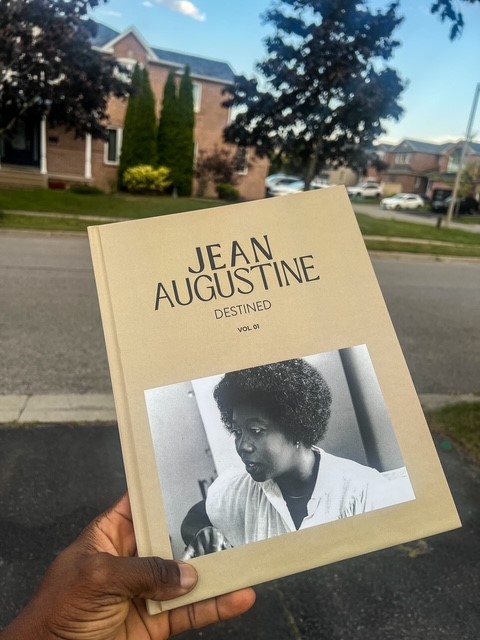
Reflecting on “Jean Augustine: Destined” – designing a photobook that honours a trailblazer
About Alpha Plus Designs
Alpha Plus Designs is a branding and design company founded by Oluwaseun Oyeniran. Inspired by Oyeniran’s faith, “Alpha Plus” as a word comes from the Bible in Revelation 1:8 which indicates God as the “Alpha and Omega, the beginning and the ending”. Built on Oyeniran’s passion for thoughtful, well‑designed products, Alpha Plus Designs was established to put Oyeniran’s core design philosophies to practice. Rooted in a love of aesthetics and practical functionality, the studio works at the intersection of design, storytelling and strategy. This article marks the launch of the Alpha Plus Designs blog. Here we will share insights about design concepting, prototyping, marketing, branding, product development and more. Whether you are a seasoned designer, an entrepreneur bringing a product to market, or someone simply curious about creative processes, this space will offer ideas, lessons and behind‑the‑scenes stories from our projects. We begin with a deep dive into our latest photobook project.
Preserving a legacy through images
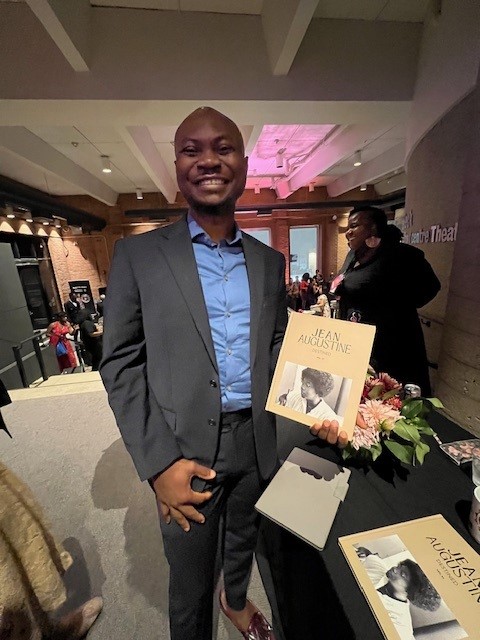
When most Canadians think of the Honourable Jean Augustine, they recall her historic achievements – she was the first Black woman to serve as a federal minister of the Crown and Member of Parliament, later held cabinet responsibilities for multiculturalism and the status of women, and successfully secured unanimous support in the House of Commons to designate February as Black History Month. Those achievements matter, but they are only part of her story. Long before the media cameras and parliamentary speeches, Augustine was a school teacher, a community organiser and a determined young immigrant building a life in 1960s Toronto. The photobook “Jean Augustine: Destined – Vol. 01”, recently released by Alpha Plus Designs, peels back the public persona to reveal the life that preceded and fuelled those milestones.
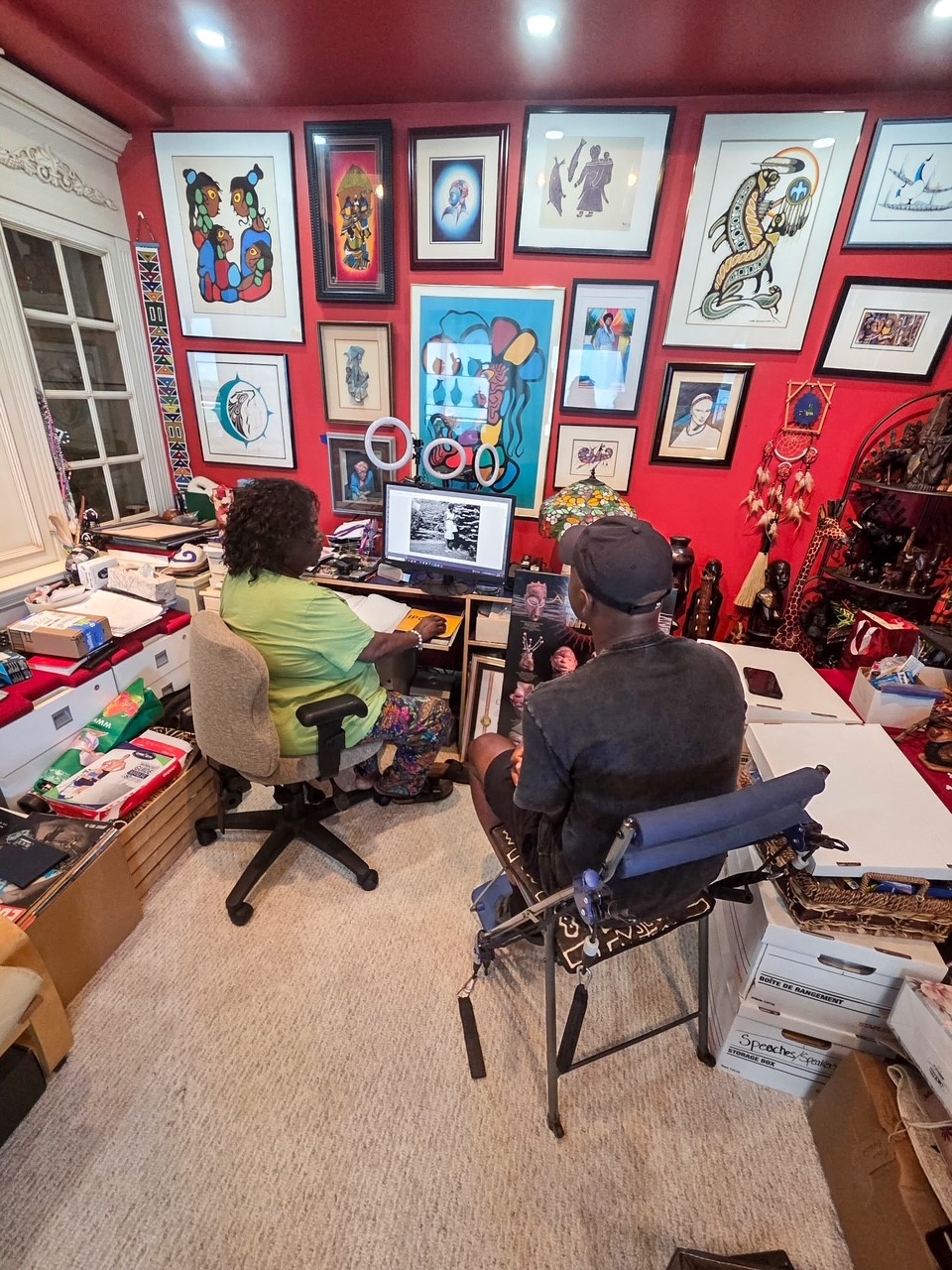
As the creative director behind the project, I (Oluwaseun Oyeniran) met with Dr. Augustine in her home office and sifted through boxes of photographs from the 1950s and 1960s. Each image – a graduation portrait, a candid shot on a Grenadian balcony, or the faces of Black Canadian women gathered in community – carries its own narrative. Together they form a visual chronology of a woman who was destined not simply to break barriers in Ottawa but to inspire generations. This post reflects on why the photobook format matters, how the design process unfolded, and what designers and publishers can learn from projects that privilege authenticity and storytelling over traditional text‑heavy formats.
A photobook, not just a book
Photobooks occupy an interesting space in publishing. They are books “in which photographs make a significant contribution to the overall content”; their closest analogue is the coffee‑table book. Early photo books relied on photographic prints being tipped into letterpress‑printed pages, but contemporary projects benefit from digital printing and binding services that allow custom layout and text integration. As Photo Evo’s explanation of custom photo‑book printing notes, the format “allows individuals to design and craft their own narratives through captivating visuals” and lets creators “tailor” each element – cover, paper, layout and captions – to reflect a unique story. For Jean Augustine: Destined, those qualities were essential. The book is neither a biography nor a curated archive; it is a visual narrative punctuated by brief textual reflections.
The choice of the photobook format was deliberate. Augustine’s early life coincided with a period when Black immigrant stories were rarely recorded in mainstream publications. By foregrounding images, the book invites readers into her world rather than lecturing at them. The layout moves from Grenada to Canada and from intimate family snapshots to public achievements, mirroring Augustine’s personal journey. The absence of long chapters encourages slow looking – readers are invited to linger over textures of a 1960s Toronto classroom or the pride in the eyes of a young teacher turned politician. In this sense, the photobook becomes a form of storytelling that is accessible across generations and literacy levels.
Designing an authentic story
Storytelling was at the heart of our design process. Authenticity demands more than simply scanning old photos and placing them on pages. It requires understanding the context behind each image and ensuring that the visual sequence honours the subject’s narrative arc.
Dr. Augustine and I spent hours discussing why particular photos mattered to her and what memories they evoked. Those conversations informed everything from the selection of images to the placement of captions.
Sequencing for narrative flow
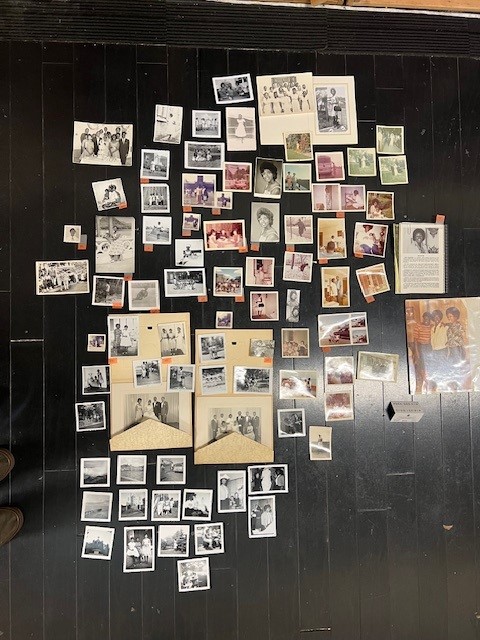
One of the key decisions when designing a photobook is the sequence. Unlike conventional books, photobooks rely on the rhythm of images to tell a story.
Our goal was to create a progression that felt intuitive: beginning with Augustine’s childhood in Grenada, moving to her early teaching career in Toronto, then highlighting her community work and political ascent. We incorporated occasional “breathing” pages with minimal text, giving readers space to reflect. This approach aligns with best‑practice advice from professional photobook printers who note that custom photo‑book projects transform images into a “stunning visual narrative”. The narrative flow ensures that each spread builds upon the previous one, guiding the reader through the decades without the need for lengthy explanations.
Balancing text and images
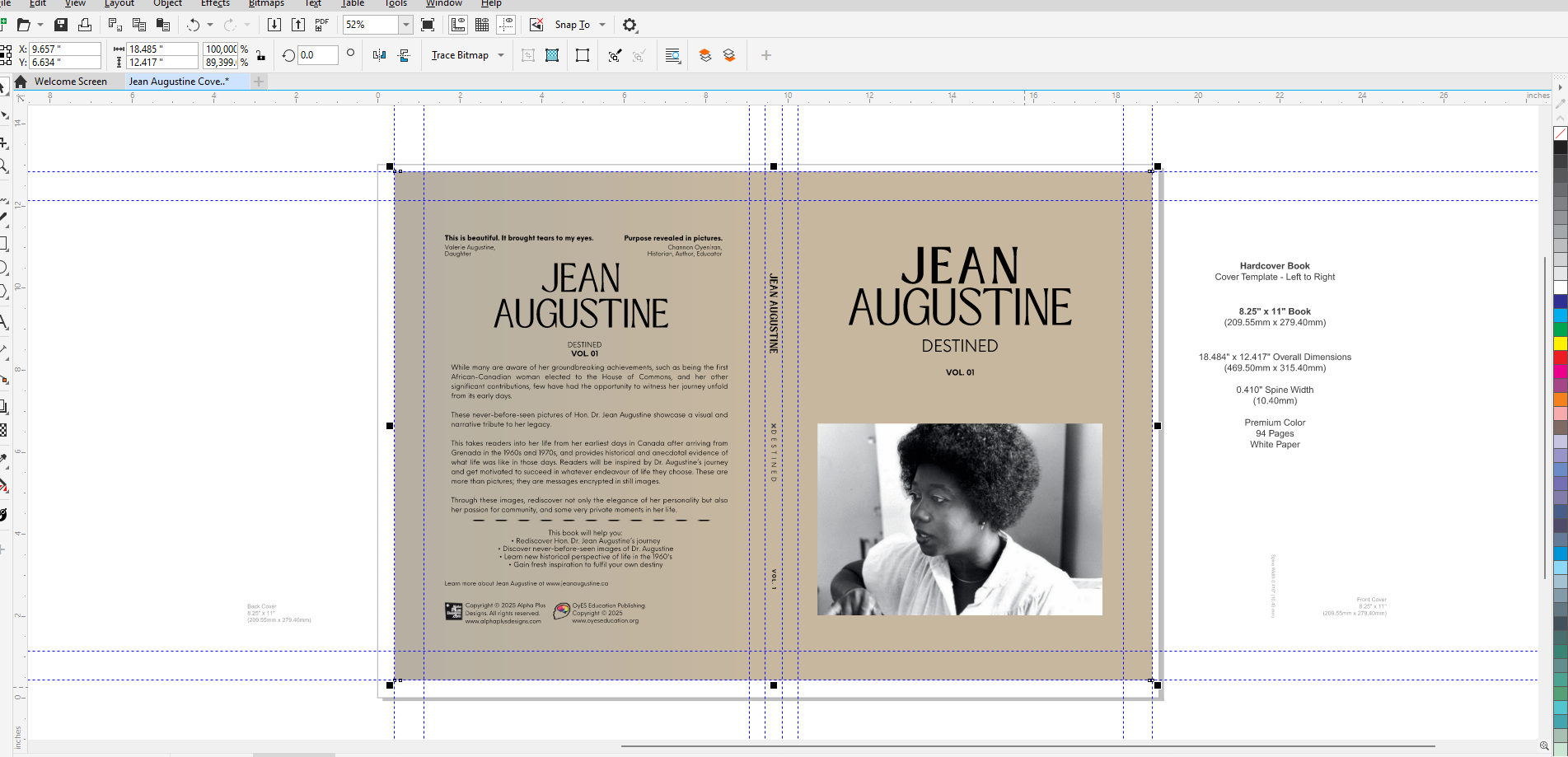
While the pictures carry much of the story, text still plays an important role. Short introductions and captions contextualise each chapter, provide dates and locations, and convey Augustine’s reflections in her own words. For designers, the challenge lies in balancing text and image so that one does not overpower the other. We opted for understated typography and generous margins to avoid clutter. When a quote or anecdote required emphasis, we used full‑bleed spreads or contrasting colour blocks to draw the eye without detracting from the photographs.
Materiality and production
Because photobooks are tactile objects, decisions about materials and printing methods are part of the narrative. The book’s linen cover and the choice of uncoated paper evoke a sense of timelessness and respect for the subject. High‑quality printing ensures that details in the archival photographs – from the weave of a dress to the grain of an old wooden railing – are preserved. As Photo Evo explains, modern photo‑book printing provides “vibrant colors, sharp details, and durable binding”, resulting in a product “that will be cherished for years to come”. For a story that spans more than seven decades, durability and visual fidelity were non‑negotiable.
Why this project matters
- Reclaiming overlooked histories
- Inspiring future generations
- Documenting community, not just an individual
By its very existence, Jean Augustine: Destined challenges the under‑representation of Black women in official archives. Augustine’s contributions are well‑documented in legislative records – she championed motions supporting low‑income families and spearheaded the recognition of Black History Month. Yet visual records of her early life are largely absent from public memory. This project fills that gap by assembling personal photographs and pairing them with contextual narrative. Designers and publishers working with marginalised subjects should recognise the power of image‑based storytelling to reclaim histories that have been ignored or minimised.
The photobook format also serves educational purposes. Younger readers who might not engage with a lengthy biography can discover Augustine’s journey through images. Seeing a young immigrant woman become a teacher, community activist and eventually a cabinet minister offers a powerful template for perseverance. The book underscores that history is made by ordinary people who dare to dream – a message reinforced by the visual evidence on every page.
Although the book focuses on Jean Augustine, it is also a record of the communities that shaped her. Photos of church choirs, neighbourhood meetings and cultural celebrations reveal the networks of support that enabled her success. For designers, this is a reminder that authentic storytelling rarely centres a single hero; it acknowledges the collective. Including community photos situates Augustine’s achievements within a broader tapestry of Black Canadian life and avoids the “great person” narrative often found in political biographies.
Lessons for designers and publishers
Start with the subject’s voice. Authenticity emerges when designers listen. Spending time with Dr. Augustine and hearing her explain the context behind each photograph ensured that our design choices reflected her lived experience rather than external assumptions.
Let the images lead the narrative. In photobooks, images are not illustrations of text; they are the story. Sequence and pacing are therefore crucial. Designers should experiment with different orders and seek a rhythm that resonates with the subject’s journey.
Balance aesthetics and legibility. Typography, white space and colour palettes should complement the photographs, not compete with them. When text is necessary, keep it concise and consider using captions or short essays rather than dense paragraphs.
Choose materials that enhance the story. Paper quality, cover fabric and binding method all contribute to how a reader experiences a photobook. Durable binding and high‑quality printing help preserve archival images for future generations.
Embrace collaboration. Photobook projects often involve multiple stakeholders – photographers, subjects, editors, designers and printers. Collaborative decision‑making enriches the narrative and ensures that the final product honours everyone involved.
Consider accessibility and distribution. While photobooks are often seen as luxury items, they can also be powerful educational tools. Publishers should explore different formats (e.g., limited editions, open‑access digital versions, exhibitions) to reach diverse audiences.
Conclusion
Creating Jean Augustine: Destined was both a design challenge and a profound privilege. The project demonstrates the potential of photobooks to preserve history, celebrate community and inspire the future. For designers and publishers, it offers a case study in how careful curation, collaborative storytelling and high‑quality production can transform a collection of photographs into a narrative artifact. Above all, it underscores the importance of listening to the voices and stories of those who have shaped our society, then using design to amplify them.
Work with us
At Alpha Plus Designs, we believe in the power of design to tell meaningful stories and create lasting impact. Use our contact page to share your thoughts, inquiries or project ideas with us. We will be more than happy to connect with you and explore how design can elevate your vision.
To learn more about Hon. Dr. Jean Augustine and to order a copy of Destined book please visit her personal website here: jeanaugustine.ca
← Back to Articles